
by Justin Jackson, Phys.org
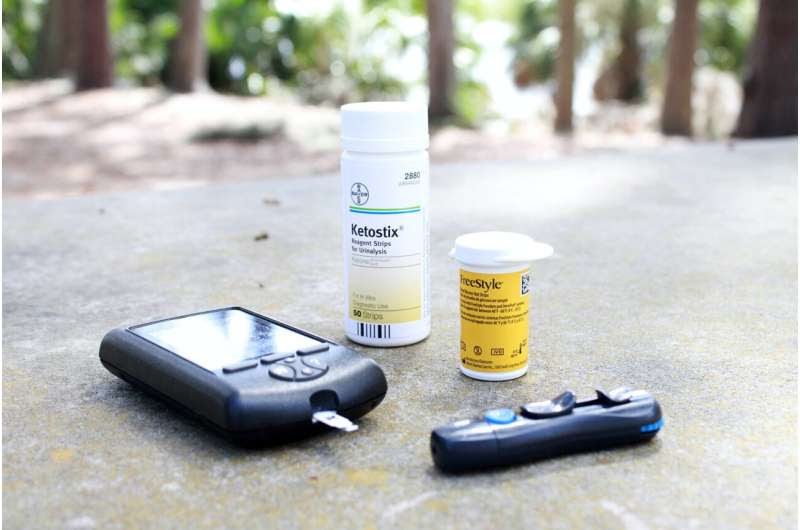
In a clinical trial led by University of Toronto researchers, an allogeneic stem cell–derived islet therapy (zimislecel) restored insulin production and ended severe hypoglycemia in adults with type 1 diabetes within a year of treatment.
More than 8 million people worldwide live with type 1 diabetes, a lifelong condition marked by the loss of insulin-producing beta cells. Without those cells, the body loses its ability to regulate blood glucose, and patients rely on supplemented insulin to avoid life-threatening complications.
Automated insulin delivery systems and continuous glucose monitors have expanded options for many patients. Even with intensive insulin therapy, most never reach recommended glycemic targets.
For patients with impaired hypoglycemia awareness, who cannot detect falling glucose levels, the margin for error is dangerously narrow.
Transplants of pancreatic islets or whole organs can restore physiologic glycemic control. Yet those procedures depend on donor tissue, and many recipients require multiple grafts from separate donors to reach partial insulin independence. Consistent, scalable methods to replace beta cells have not been available.
In the study, “Stem Cell–Derived, Fully Differentiated Islets for Type 1 Diabetes,” published in The New England Journal of Medicine, researchers conducted a Phase I/II trial to evaluate whether zimislecel could safely restore islet function and improve glycemic control in adults with type 1 diabetes.
Fourteen volunteers (two in part A and 12 in parts B and C) completed at least 12 months of follow-up at centers across North America and Europe. Participants aged 18 to 65 years with type 1 diabetes, impaired hypoglycemia awareness, and a history of at least two severe hypoglycemic events in the prior year, underwent a single gravity-assisted portal-vein infusion of zimislecel. All had used continuous glucose monitoring for at least three months before enrollment.
All participants were treated with glucocorticoid-free immunosuppressive therapy, including induction and maintenance regimens. Administration was staggered in early phases for safety monitoring, and concurrent in later phases.
Among the 12 full-dose recipients, all remained free of severe hypoglycemia, achieved HbA1c below 7%, and spent more than 70% of time in the 70–180 mg/dL range during year one. Ten became insulin independent, and mean insulin dose in the remaining two fell sharply.
Neutropenia stood as the most common serious adverse event, noted in three participants. Two deaths were reported: one from cryptococcal meningitis after off-protocol glucocorticoid use, and one from progression of pre-existing neurocognitive impairment.
Investigators conclude that a single zimislecel infusion restored physiologic islet function and markedly improves glycemic control, suggesting a potentially scalable cell-based alternative to lifelong insulin therapy and donor-dependent transplants.
While the initial results are highly promising, the trial was open-label and a small cohort with non-prespecified outcomes. Validation requires a larger cohort, longer-term follow-up, and a more comprehensive trial design. A more advanced trial is currently underway.
Written for you by our author Justin Jackson, edited by Sadie Harley , and fact-checked and reviewed by Robert Egan —this article is the result of careful human work. We rely on readers like you to keep independent science journalism alive. If this reporting matters to you, please consider a donation (especially monthly). You’ll get an ad-free account as a thank-you.
More information: Trevor W. Reichman et al, Stem Cell–Derived, Fully Differentiated Islets for Type 1 Diabetes, New England Journal of Medicine (2025). DOI: 10.1056/NEJMoa2506549
© 2025 Science X Network
Explore further
Automated insulin delivery improves glycemic control of type 2 diabetes in randomized trial