
by Justin Jackson, Phys.org
edited by Sadie Harley, reviewed by Andrew Zinin
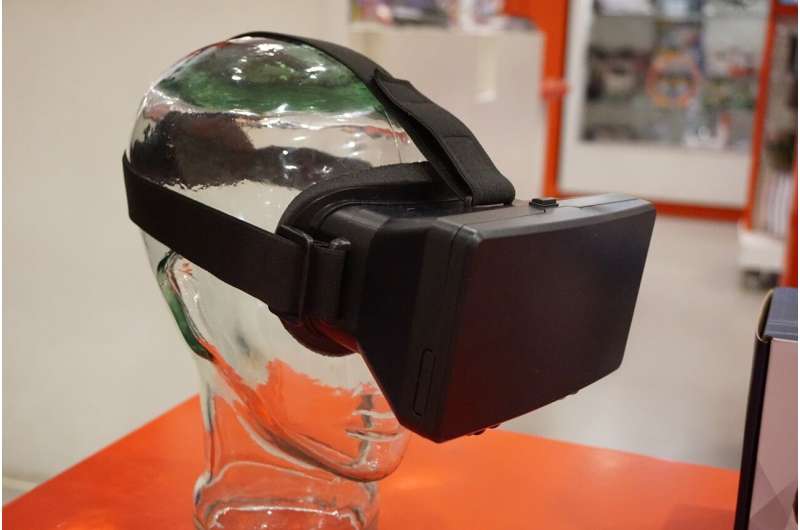
Copenhagen University Hospital’s VIRTU Research Group reports that an immersive virtual reality-assisted therapy called Challenge-VRT yielded a statistically significant, short-term reduction in auditory verbal hallucination severity among Danish adults with schizophrenia spectrum disorders.
Auditory verbal hallucinations rank among the most frequent and distressing features of schizophrenia, affecting roughly 75% of patients and resisting medication in about one-third. Approximately 13% of patients experience worsening hallucinations during their first decade of illness.
Current cognitive behavioral and relational psychotherapies show modest effects, leaving a clear unmet need for innovative treatment approaches.
In the study, “Immersive virtual reality-assisted therapy targeting persistent auditory verbal hallucinations in patients diagnosed with schizophrenia spectrum disorders in Denmark: the Challenge assessor-masked, randomized clinical trial,” published in The Lancet Psychiatry, researchers evaluated the efficacy and safety of Challenge-VRT compared with enhanced treatment-as-usual for persistent auditory hallucinations.
Trial enrollment reached 270 adults (mean age 32.83 years; 61% female) recruited from outpatient psychiatric services across Denmark’s Capital Region, North Denmark Region, and Region of Southern Denmark.
Participants were randomized 1:1 to receive seven weekly sessions of immersive Challenge-VRT plus two booster sessions or frequency-matched enhanced treatment-as-usual; outcome assessors remained masked.
Therapists used head-mounted displays to facilitate real-time immersive dialogue between participants and avatars representing their dominant voices. Co-developed with individuals experiencing hallucinations, the intervention centered on reclaiming power from voices, building self-worth, and supporting recovery.
Primary endpoint was the clinician-rated Psychotic Symptoms Rating Scales–Auditory Hallucinations (PSYRATS-AH) total severity score 12 weeks after baseline.
Participants receiving Challenge-VRT showed a 12.9% reduction in total hallucination severity compared with their own baseline scores. Voice frequency also declined by 14.4% and remained significantly reduced at 24 weeks. No significant differences emerged for voice-related distress, perceived voice power, assertive responding, or social functioning.
Intervention was generally well tolerated. About 37% of Challenge-VRT participants reported a transient increase in hallucination symptoms after initial avatar dialogues. Six serious adverse events potentially related to therapy occurred, comprising five hospitalizations for symptom exacerbation and one self-harm episode, with no deaths or violence.
Study authors conclude that immersive avatar dialogues delivered in virtual reality represent a feasible, acceptable option for schizophrenia patients whose voices persist despite medication, and point toward broader clinical use as software and supervision models mature.
Written for you by our author Justin Jackson, edited by Sadie Harley, and fact-checked and reviewed by Andrew Zinin—this article is the result of careful human work. We rely on readers like you to keep independent science journalism alive. If this reporting matters to you, please consider a donation(especially monthly). You’ll get an ad-free account as a thank-you.
More information: Lisa Charlotte Smith et al, Immersive virtual reality-assisted therapy targeting persistent auditory verbal hallucinations in patients diagnosed with schizophrenia spectrum disorders in Denmark: the Challenge assessor-masked, randomised clinical trial, The Lancet Psychiatry (2025). DOI: 10.1016/S2215-0366(25)00161-0
Mark Hayward, Avatar therapy: does 3D add value?, The Lancet Psychiatry (2025). DOI: 10.1016/S2215-0366(25)00210-X
© 2025 Science X Network
Explore further
Transcranial magnetic stimulation reduces auditory hallucinations in small clinical trial