
Richard Mark Kirkner
September 22, 2025
A large retrospective study of Veterans Affairs patients with a history of skin cancer has provided support to what a smaller randomized clinical trial reported about a decade ago: that patients taking nicotinamide 500 mg twice daily can significantly reduce their risk for skin cancer, with the greatest effect seen in those who take the supplement after their first episode of skin cancer.
 Lee Wheless, MD, PhD“We observed a 14% reduced risk of skin cancer among patients taking nicotinamide,” study leader Lee Wheless, MD, PhD, assistant professor of dermatology, Vanderbilt University Medical Center, Nashville, Tennessee, told Medscape Dermatology. “This increased to a 56% reduction in skin cancer risk among those who started nicotinamide after their first skin cancer, but the benefit slowly decreased when starting after each subsequent skin cancer.”
The findings, reported online in JAMA Dermatology on September 17, included 12,287 patients taking 500 mg of oral nicotinamide twice a day for 30 days or more and matched them against 21,479 patients not taking the supplement. The matched cohort included 1334 organ transplant recipients, a population known to have a higher risk for skin cancers. The retrospective cohort study used patient records from the Veterans Health Administration (VHA)’s Corporate Data Warehouse collected through 2024. Most participants were men (98%) and White (approximately 95%), with a mean age of about 77 years.
 Sarah Arron, MD, PhD“This should change our practice,” Sarah Arron, MD, PhD, dermatologist with Palo Alto Foundation Medical Group in Palo Alto, California, and author of an accompanying editorial, told Medscape Medical News. “We shouldn’t wait for patients to be severely sun-damaged or develop multiple skin cancers before we intervene.”
Building on Previous Studies
Arron noted that while the retrospective chart review nature of the study does not carry the strength of evidence that a randomized controlled trial would, the study findings support those of the smaller ONTRAC clinical trial published in 2015, which found that oral nicotinamide reduced the rates of nonmelanoma skin cancers and actinic keratoses in high-risk patients. Since that study, “the enthusiasm [for nicotinamide] died because there wasn’t much in the literature after that,” Arron said.
Wheless said his group’s retrospective cohort builds on the findings of previous studies. “This study is the first one to examine the timing of treatment with nicotinamide, finding that an earlier initiation might be more beneficial,” he said.
In patients taking oral nicotinamide compared with those not taking the supplement, the new study found no reduction overall in basal cell carcinomas (BCCs), but a 22% reduction in cutaneous squamous cell carcinomas (cSCCs). For the three groups — new skin cancers, BCCs, and cSCCs — the study found a roughly 50% decrease in the rate of skin cancers in patients who started taking nicotinamide at the time of the first skin cancer.
Patients who had 30-90 days or 90-365 days of nicotinamide use had a lower risk for skin cancer than those who were on nicotinamide for a year or more (19% and 16%, respectively).
“I was really surprised by the magnitude of the risk reduction in the early groups,” Wheless said. “I think a lot of dermatologists, myself included, have felt that the 23% risk reduction from the original ONTRAC study seemed too optimistic.”
Prevention in Transplant Patients
In solid organ transplant patients, the study found no significant overall risk reduction with nicotinamide, but for one group, the study did find a benefit. “For cutaneous squamous cell carcinoma, we did observe a 53% reduction in risk for those solid organ transplant recipients starting nicotinamide after their first or second skin cancer,” Wheless said.
This cohort study “adds to the data supporting use in organ transplant recipients,” Arron noted.
The study findings are not necessarily a blanket statement that patients who have had skin cancer should take nicotinamide, Wheless said. He cited a study his group published this year that reported among 5.5 million patients with skin cancer, only 43% of them developed an additional cancer within the study timeframe of roughly 10 years.
“This means that 57% of patients would not see any risk reduction in skin cancer, as they aren’t likely to develop another one in that window,” he said. “On the other hand, in that study, we saw that 3% of patients contributed 22% of the total number of skin cancers in the entire study.”
This represents an opportunity for precision medicine, “if we can identify these patients earlier using biomarkers or clinical factors associated with developing multiple skin cancers,” Wheless added.
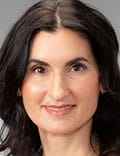 Melissa Pugliano-Mauro, MDThe study “reinforces the benefit” of nicotinamide as a preventive approach for nonmelanoma skin cancer in patients with a history of these cancers, said Melissa Pugliano-Mauro, MD, director of dermatologic surgery at the University of Pittsburgh Medical Center, Pittsburgh, who has led the research on nicotinamide for preventing skin cancer in solid organ transplant recipients.
“Clinicians can gather guidance on when to start nicotinamide for their patients from this study,” she told Medscape Medical News. “The study indicates that nicotinamide is most effective for preventing cutaneous squamous cell carcinoma after the first cSCC develops and for preventing basal cell carcinoma after the first or second BCC.”
While the use of nicotinamide in solid organ transplant recipients “is still unclear,” the study “clarifies” the timing of nicotinamide use after the first or second skin cancer in these patients, Pugliano-Mauro added. “Interestingly, this aligns with previous data showing the benefits of early conversion from a calcineurin inhibitor to an mTOR [mammalian target of rapamycin] inhibitor in solid organ transplant recipients after the first cSCC for skin cancer prevention,” she said.
Pugliano-Mauro said she has been prescribing nicotinamide to solid organ transplant recipients as secondary prevention of skin cancer.
“Many patients have reported fewer skin cancers since starting the treatment,” she said. “So far, none have experienced interactions with their immunosuppressive medications,” and side effects “have been minimal,” mostly gastrointestinal in nature.
She avoids using nicotinamide in patients who are being treated for gout. “I had one patient develop a gout flare, likely because nicotinamide competes with uric acid for excretion in the kidneys,” Pugliano-Mauro added.
The Office of Research and Development of the VHA funded the study. Wheless reported receiving grant funding from the VHA. Arron reported having financial relationships with Regeneron, Replimune, Castle Biosciences, Enspectra Health, Inc., Sol-Gel Technologies, and Canfield Scientific. Pugliano-Mauro reported having no relevant financial relationships.
Richard Mark Kirkner is a medical journalist based in Philadelphia.