
December 3, 2025
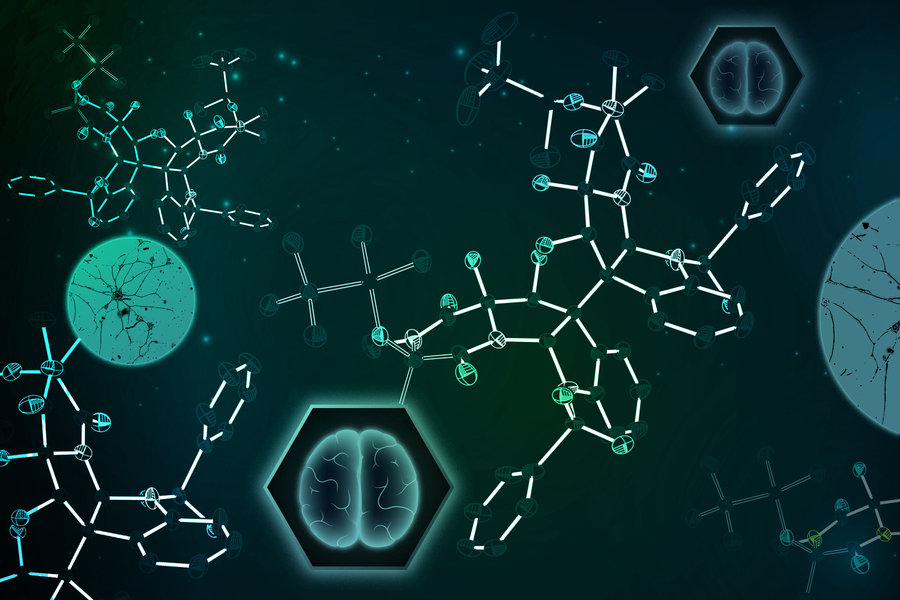
In tests in human cancer cells, a derivative of verticillin A showed particular promise against a type of pediatric brain cancer called diffuse midline glioma.
Credit: MIT News; figure courtesy of the researchers
For the first time, MIT chemists have synthesized a fungal compound known as verticillin A, which was discovered more than 50 years ago and has shown potential as an anticancer agent.
The compound has a complex structure that made it more difficult to synthesize than related compounds, even though it differed by only a couple of atoms.
“We have a much better appreciation for how those subtle structural changes can significantly increase the synthetic challenge,” says Mohammad Movassaghi, an MIT professor of chemistry. “Now we have the technology where we can not only access them for the first time, more than 50 years after they were isolated, but also we can make many designed variants, which can enable further detailed studies.”
In tests in human cancer cells, a derivative of verticillin A showed particular promise against a type of pediatric brain cancer called diffuse midline glioma. More tests will be needed to evaluate its potential for clinical use, the researchers say.
Movassaghi and Jun Qi, an associate professor of medicine at Dana-Farber Cancer Institute/Boston Children’s Cancer and Blood Disorders Center and Harvard Medical School, are the senior authors of the study, which appears today in the Journal of the American Chemical Society. Walker Knauss PhD ’24 is the lead author of the paper. Xiuqi Wang, a medicinal chemist and chemical biologist at Dana-Farber, and Mariella Filbin, research director in the Pediatric Neurology-Oncology Program at Dana-Farber/Boston Children’s Cancer and Blood Disorders Center, are also authors of the study.
A complex synthesis
Researchers first reported the isolation of verticillin A from fungi, which use it for protection against pathogens, in 1970. Verticillin A and related fungal compounds have drawn interest for their potential anticancer and antimicrobial activity, but their complexity has made them difficult to synthesize.
In 2009, Movassaghi’s lab reported the synthesis of (+)-11,11′-dideoxyverticillin A, a fungal compound similar to verticillin A. That molecule has 10 rings and eight stereogenic centers, or carbon atoms that have four different chemical groups