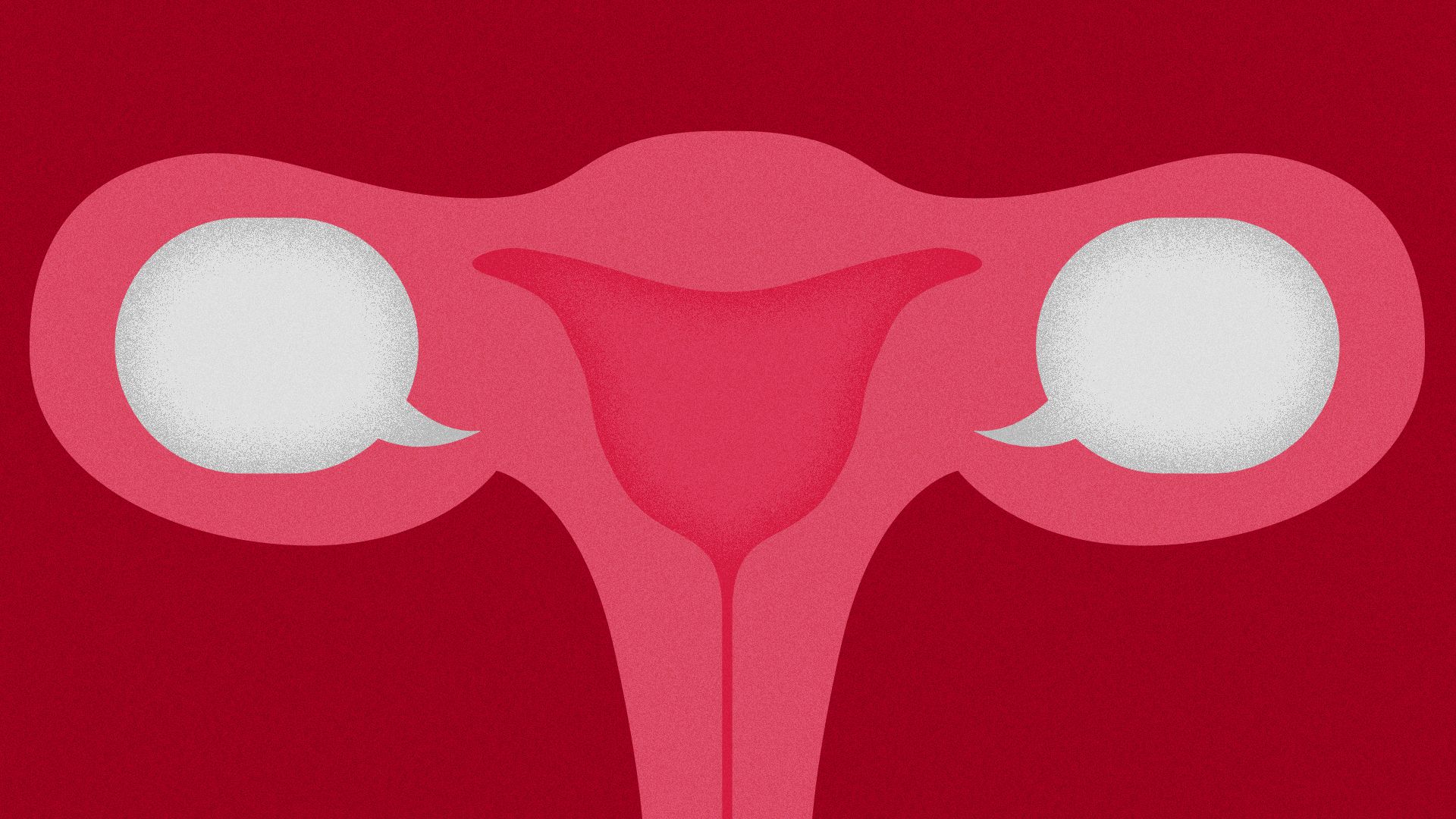
Medical closure, courtesy of ChatGPT


Illustration of the negative space within the female reproductive system replaced with speech bubbles.
Illustration: Maura Losch/Axios
After a near-death experience postpartum, I worried for about a year and a half whether months of complications could return at any moment, Erin Brodwin writes. ChatGPT gave me the closure my doctors didn’t.

  • Why it matters: As a lifelong skeptic of any shiny new gadget, I never thought a 4-year-old chatbot would explain my medical saga better than a dozen human providers.

📂 What I did: I uploaded all 820 pages of my medical record to ChatGPT and asked why I nearly bled to death three times in the months after giving birth to my first child.

  • I added context by including my experience after my preeclampsia diagnosis and C-section.
  • What I feared most was that I had a rare blood disorder that had never been found.

⏳ Within minutes, ChatGPT gave me the information I had all but given up hope of receiving.

  • “The lack of a single clean diagnosis isn’t because nothing happened — it’s because placental disorders often evade neat labels.”
  • It added: “Your experience is medically coherent, even if it wasn’t well explained to you at the time.”

😌 I felt physically better and mentally lighter. Still, knowing ChatGPT has a reputation for hallucinating, I booked another OB appointment.

  • The 12-page printout I brought never came out of my bag; it didn’t need to.
  • My doctor confirmed what the bot had suggested: I was OK, and it was highly unlikely anything was seriously wrong with my blood.

🫄 How we got here: Late in my pregnancy, I was diagnosed with preeclampsia and, after 38 hours of labor following an induction at 35 weeks, I chose a C-section.

  • In the final hours before surgery, my condition rapidly worsened. My blood began to lose its ability to clot.
  • Delivery is the only known cure for preeclampsia, and the surgery solved that. But the bleeding didn’t stop.
  • I had two more severe episodes at home, each sending me to the ER and back into surgery.

🩺 Months later, no one could explain what had happened or tell me it was over.

  • “I’m so sorry,” the doctor I saw kept saying. “In all my years, I’ve never seen anything like this.”
  • “So what should we do?” my spouse and I asked in unison. “Take it a day at a time,” he said.

So I did — until I couldn’t. After several months, I went looking for a cause, a diagnosis, proof it was finally over. ChatGPT’s explanations were shocking in their simplicity and certainty.

  • “You didn’t almost die because of bad luck,” ChatGPT explained. “You almost died because multiple high-risk obstetric conditions overlapped, and some of them only declared themselves after delivery.”

🌤️ To say I felt relief would be an understatement. I’d been bracing for an unbearable finale.

The bottom line: ChatGPT didn’t save my life or reveal a mystery diagnosis. It explained it — giving me relief no doctor had.

Share this story.

The fight over copycat GLP-1s peaks
By Peter Sullivan
Illustration of scales of justice weighing vaccine syringes.
Illustration: Shoshana Gordon/Axios
An intensifying showdown over copycat GLP-1 weight-loss drugs is pitting the administration and drug companies against compounding pharmacies and some telehealth companies.

Why it matters: The outcome will decide if cheaper versions of the blockbuster treatments that haven’t been evaluated by the FDA for safety and effectiveness remain widely available.

State of play: At issue is whether compounded GLP-1 drugs can still be widely sold after the FDA declared that the blockbuster anti-obesity treatments were no longer in shortage.

  • Telehealth company Hims & Hers backed off plans to sell a compounded version of the Wegovy pill this week after the FDA threatened regulatory action and HHS referred the company to the Justice Department for potentially violating federal drug law.
  • Hims & Hers still is offering its versions of injectable weight-loss drugs, leaving open questions about whether regulators will act against those next. The company also is facing a patent infringement suit from Wegovy’s maker, Novo Nordisk.

What they’re saying: “In some instances, it seems like Hims is doing their best to get right up to the line of what the [compounding law] allows,” said Jacob Sherkow, a law professor at the University of Illinois.

  • Efforts like Hims’ short-lived attempt to launch its own version of the Wegovy pill “don’t necessarily pass the sniff test,” he said.

The big picture: If Hims & Hers prevails, it and other companies could try to do the same for other types of drugs, which critics say would further undermine the U.S. drug approval system and FDA checks on safety and efficacy.

  • That also would put telehealth companies in competition with the Trump administration, which has been negotiating lower prices for branded GLP-1s and other treatments — and touting them on its TrumpRx platform.

Keep reading

from STAT:

vaccines

FDA refuses to review Moderna’s flu vaccine

The FDA refused to review Moderna’s application for a new flu vaccine, the company said yesterday. It’s a surprising decision that could raise concerns about the agency’s posture toward drug companies and, of course, the administration’s policies on vaccines overall.

Moderna’s rejection is only the latest example of biologics director Vinay Prasad subjecting vaccines to harsher scrutiny than his predecessors; a notable policy position given health secretary Robert F. Kennedy Jr.’s history as a vaccine critic. At the heart of the Moderna dispute is which existing influenza vaccine the company should have used as a control when testing the efficacy of its new shot, which utilizes the same mRNA technology as in its Covid-19 vaccine. Read more from STAT’s Matthew Herper and Helen Branswell.

more vaccines

Confidence in safety of certain vaccines is dropping

In not unrelated news: Confidence in the safety of flu, Covid-19, and MMR vaccines appears to be dropping, new polling data from the University of Pennsylvania’s Annenberg Public Policy Center suggests. The findings, based on a survey conducted between Nov. 17 and Dec. 1, come at a time when full-throated endorsements of vaccines from federal health officials are so rare as to be newsworthy — even though the country is in the grips of multiple measles outbreaks and a bad flu season.

In the 2025 survey, 83% of adults said they think the MMR vaccine is safe; corresponding figures for flu and Covid vaccines sit at 80% and 65%, respectively. That was a 3 percentage point drop in confidence for both the MMR and flu vaccines as compared to 2024; there was no change vis-à-vis Covid shots. The decline in trust between 2025 and 2022 was sharper still, with 5 percentage point declines for MMR and flu vaccines and an 8 percentage point drop for Covid vaccine. — Helen Branswell

one big number

71%

That’s the percentage of baby food products that can be classified as ultra-processed foods, according to a study published today in Nutrients. And it’s not just that they’re ultra-processed, which STAT’s Sarah Todd and I agreed was not necessarily surprising. It’s that these ultra-processed products contained twice as much sugar as their counterparts, which also didn’t contain any added sugars. The ultra-processed baby foods were also consistently higher in sodium and generally more calorie dense.

The study looked particularly at “complementary foods,” meaning those fed to a baby who is still drinking breast milk or formula. Researchers analyzed 651 baby food products available in the spring of 2023 at grocery chains (think Walmart, Kroger, Publix, etc.) in Raleigh, N.C. A product was ultra-processed if it included at least one ingredient from a list of more than two dozen that range from fruit juice concentrates and gluten to foaming, gelling, and glazing agents.

It’s possible, the authors suggest, that eating ultra-processed foods during this period doesn’t just have a direct nutritional impact, but could shape a person’s taste preferences and dietary patterns. For more on how ultra-processed foods captured the baby and toddler market, re-visit another great Sarah story from last year.

Facebook
Twitter
LinkedIn
Pinterest
Email

Related Posts

What is hyperphosphatemia?

Symptoms Causes Diagnosis Treatment Prevention Outlook Excess phosphate in the blood is known as hyperphosphatemia. The most common cause is kidney disease, but other conditions

Read More »
Scroll to Top