
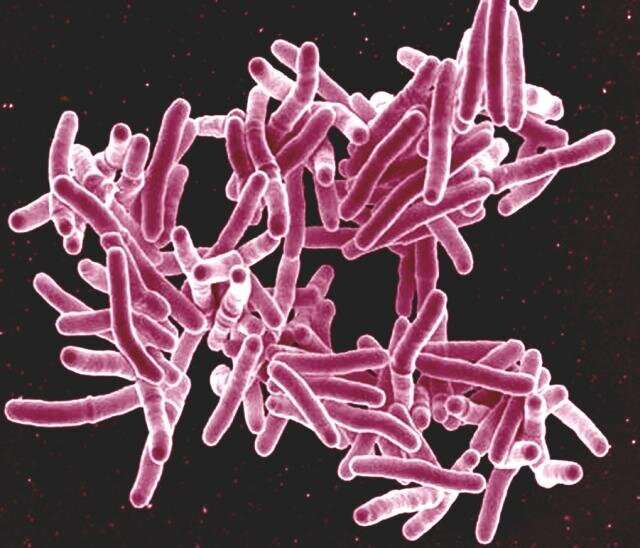
Scanning electron micrograph of Mycobacterium tuberculosis bacteria, which cause TB. Credit: NIAID
A higher dose of the antibiotic rifampicin does not improve survival rates for patients with tuberculous meningitis. This severe form of tuberculosis causes inflammation of the brain membranes, and half of the patients die. These findings come from a large international study conducted by Radboud University Medical Center and its international partners. The research has now been published in the New England Journal of Medicine.
Each year, 11 million people worldwide develop tuberculosis, and about 1.4 million die from it. Meningitis occurs in 1%–2% of patients and is the most severe complication of tuberculosis, arising when the bacteria reach the brain. Despite antibiotic treatment, about half of patients with TB meningitis die or suffer permanent damage such as deafness or paralysis.
Hospital pharmacist, clinical pharmacologist, and professor Rob Aarnoutse explains, “In previous studies, we saw that very little rifampin—the most important antibiotic against tuberculosis—reaches the brain. That means the bacteria are not effectively cleared there. But those studies also showed a link between higher dosing and reduced mortality. Based on that, we and many international researchers started investigating a higher dose of rifampin.”
Higher dose antibiotic
Worldwide, several studies began examining the effects of higher rifampin doses, and the first trial has now been completed. This study, co-designed by Radboudumc and conducted in Indonesia, Uganda, and South Africa, investigated whether a high dose of rifampin could improve survival.
A total of 499 adults with tuberculous meningitis received the standard treatment of four antibiotics (isoniazid, rifampin 10 mg/kg, pyrazinamide and ethambutol). Half also received an extra dose of rifampin (up to 35 mg/kg), while the other half received a placebo for eight weeks. The average patient age was 37, and 60% were HIV-positive. Researchers assessed survival after six months.
No effect
The study found no evidence of a beneficial effect from high-dose rifampin. In fact, some subgroups there appeared to be at an increased risk of death. After six months, 44.6% of the high-dose group had died, compared to 40.7% in the standard group. “The higher mortality seems to occur mainly in the first weeks after diagnosis,” says researcher Reinout van Crevel, internist-infectiologist and professor at Radboudumc.
Van Crevel has studied tuberculosis for 25 years, especially in Indonesia. He adds, “It was, of course, disappointing that this is not the solution. But these are important results—we now know we need to take a different path. That’s how science works.”
Follow-up research
Follow-up studies at Radboudumc using stored blood and cerebrospinal fluid samples, led by biomedical scientist and toxicologist Lindsey te Brake, aim to uncover why high-dose rifampin had no beneficial effect. Meanwhile, Van Crevel and colleagues are shifting focus from the tuberculosis bacteria to the inflammation in the brain membranes.
“Analysis of cerebrospinal fluid and blood showed more inflammation in patients who died than in others. We suspect the protein TNF plays a key role. TNF helps clear bacteria but can also cause severe damage to the brain,” Van Crevel explains.
Current treatment with antibiotics and anti-inflammatory drugs offers insufficient protection. There is an urgent need for therapies that better control this inflammatory response, possibly using TNF inhibitors. Van Crevel states, “These drugs are sometimes used later in the treatment of tuberculous meningitis when corticosteroids fail. We have had good experiences with them both here in our own TB center and in Jakarta. But no one has used TNF inhibitors at the start of treatment—when most patients die. That’s what we will investigate in the next clinical trial.”
More information
Trial of High-Dose Oral Rifampin in Adults with Tuberculous Meningitis, New England Journal of Medicine (2025).
Journal information: New England Journal of Medicine
Key medical concepts
Tuberculosis, Meningeal Rifampin TNF Gene Isoniazid
Explore further
Tuberculous meningitis: Study finds metabolism drives mortality