
by Canadian Medical Association Journal
edited by Sadie Harley, reviewed by Andrew Zinin
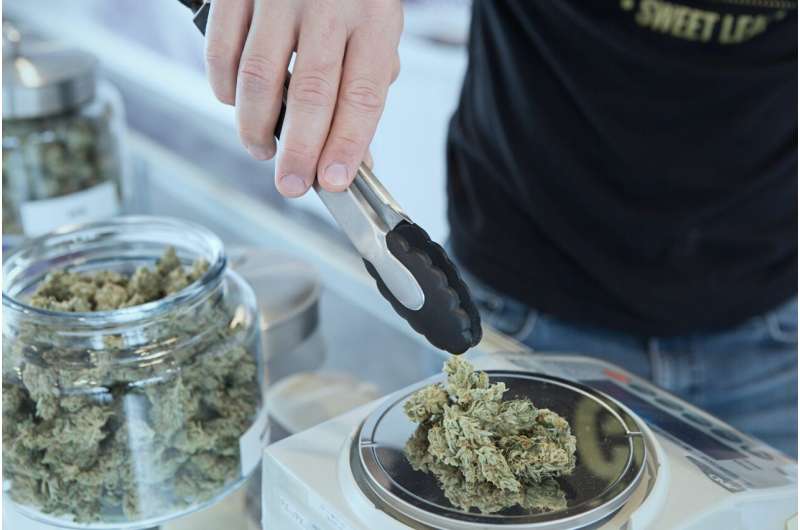
Five things to know about cannabis and psychosis have been published in the Canadian Medical Association Journal.
- Cannabis potency is increasing—The concentration of tetrahydrocannabinol (THC) has increased fivefold in the last 20 years in Canada from about 4% to 20% in most legal dried cannabis.
- High-potency and regular cannabis use is linked to increased risk of psychosis—The risk of psychosis is increased in people using high-potency THC (more than 10% THC), people using it frequently, and those who are younger and male. A history of mental disorders (depression, anxiety, etc.) also appears to increase the risk.
- Cannabis-induced psychosis and cannabis use disorder increase the risk of schizophrenia—A recent study of 9.8 million people in Ontario found a 14.3-fold higher risk of developing a schizophrenia-spectrum disorder in people visiting the emergency department for cannabis use and a 241.6-fold higher risk from visits for cannabis-induced psychosis.
- Treatment requires stopping cannabis and taking medication—Continued use of cannabis after a first episode of cannabis-induced psychosis is linked to greater risk of returning symptoms. Antipsychotic medication can help people with severe and prolonged symptoms.
- Behavioral options may help with cannabis cessation—Motivational interviewing or cognitive behavioral therapy by a physician or psychologist can help build skills to resist cravings and follow treatment recommendations.
“Cannabis from the 2000s is not the same as in 2025,” said co-author Dr. Nicholas Fabiano, MD, resident and researcher with the Department of Psychiatry, University of Ottawa, Ottawa, Ontario. “THC content has increased by five times. This is likely a significant driver in the increasing link between cannabis use and schizophrenia.”
More information: Cannabis and psychosis, Canadian Medical Association Journal (2025). DOI: 10.1503/cmaj.250659
Explore further
Study shows young adults who use high strength cannabis do not ‘titrate’ to less risky levels of use
