
Charted: Severely obese adult


By Maya Goldman
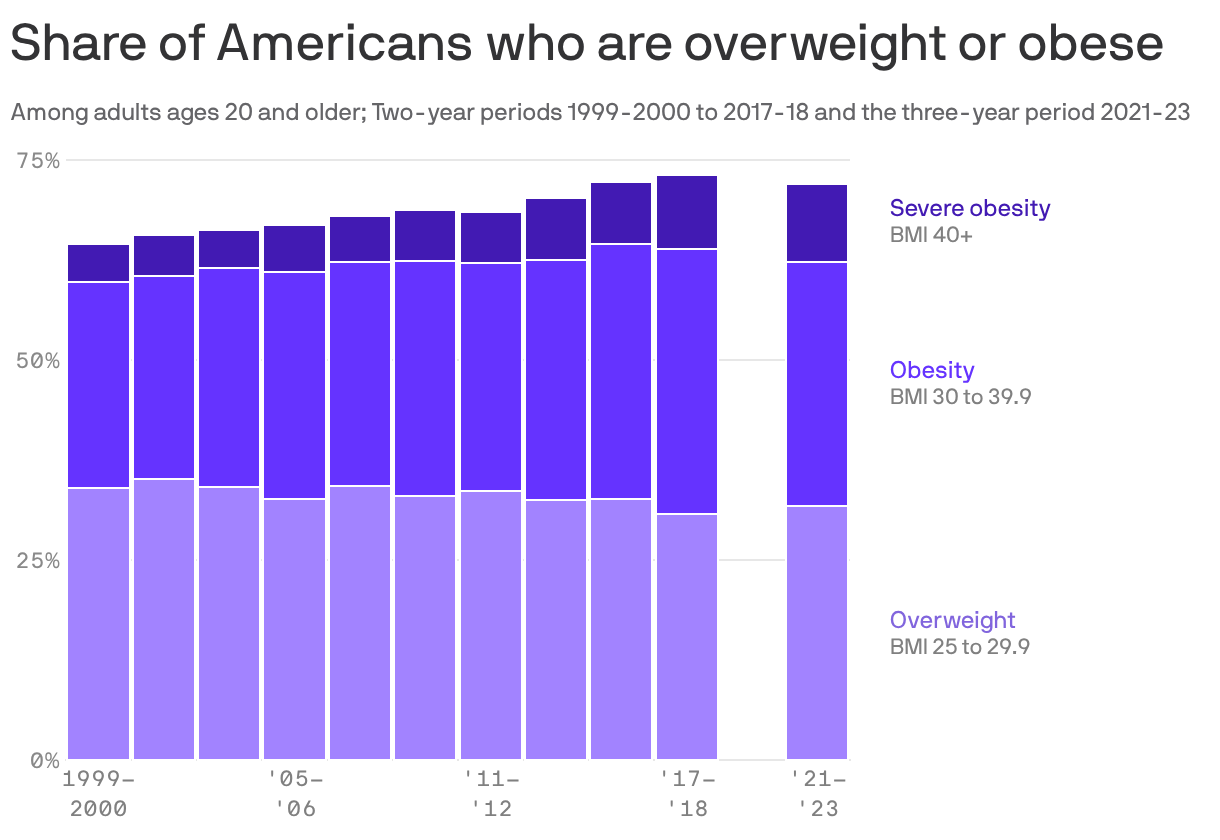
A stacked column chart showing the share of Americans who are overweight or obese. The share has climbed from 65% in the period from 1999-2000 to 72% in the period from 2021 to 2023.

Data: CDC; Chart: Axios Visuals

Nearly 1 in 10 American adults qualified as severely obese in a sample ending in 2023, according to new data from the CDC.

Why it matters: Obesity ranks at or near the top of Americans’ public health concerns and is fueling a surge of demand for GLP-1 drugs.

  • The CDC’s population data distinguishes between severely obese — having a body mass index of 40 or higher, which can lead to conditions like Type 2 diabetes and heart disease — and obese.

What they found: Obesity and severe obesity rates for U.S. adults have risen sharply in recent decades.

  • More than 40% qualified as obese in a representative sample of adults age 20 and older taken between August 2021 and August 2023. That’s up from 30.5% in the 1999-2000 sample.
  • Severe obesity rates reached 9.7% in 2023, up from 4.7% in 2000.
  • The percentage of overweight adults dropped slightly from 34% at the start of the study period to 31.7% by mid-2023.

The intrigue: This data stops right as demand for GLP-1 drugs began to skyrocket.

  • The FDA approved Novo Nordisk’s Wegovy for weight management in 2021, and Eli Lilly’s Zepbound for obesity treatment in 2023. Compounded GLP-1s from telehealth companies have also become more available in the years since.
from STAT:

Novo’s slashing of list prices may not affect insurance coverage

Novo Nordisk said that the slashing of U.S. list prices of its GLP-1 drugs, announced yesterday, will expand access for patients. It will certainly lower out-of-pocket costs for patients who pay coinsurance or are on high-deductible plans, but experts noted it won’t necessarily lead more payers to cover the treatments.

Payers ultimately care about net prices — the actual prices they pay after rebates and discounts. In a statement to STAT, Novo said “we do not expect the reduction in list price to impact net price.”

If list prices decrease but net prices stay the same, then payers won’t be incentivized to expand coverage. In fact, they could have even more reasons to restrict or drop coverage.

Read more on why that is.


Facebook
Twitter
LinkedIn
Pinterest
Email

Related Posts

What is hyperphosphatemia?

Symptoms Causes Diagnosis Treatment Prevention Outlook Excess phosphate in the blood is known as hyperphosphatemia. The most common cause is kidney disease, but other conditions

Read More »
Scroll to Top