
by Justin Jackson, Medical Xpress
edited by Sadie Harley, reviewed by Robert Egan
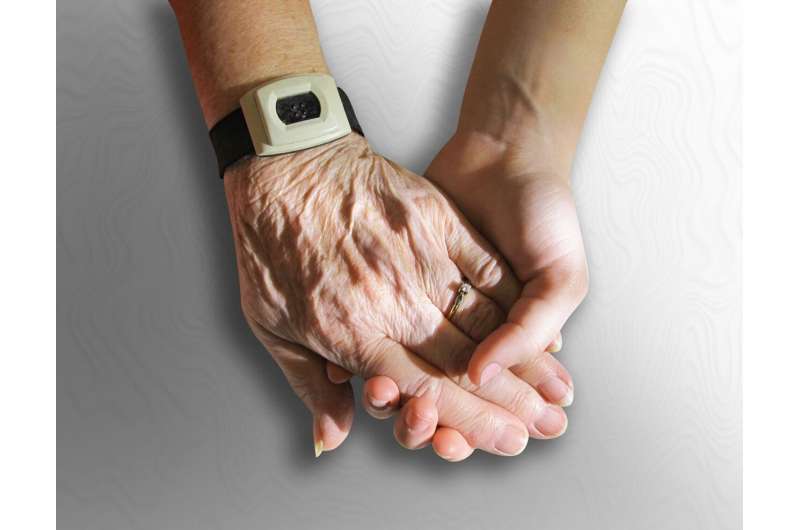
Credit: Pixabay/CC0 Public Domain
Craif Inc. in Nagoya, Japan, working with Nagoya University’s Institute of Innovation for Future Society, has developed a urine-based biological aging clock. In validation of the method, predicted ages came within 4.4 years of chronological age on average.
Aging, as we tend to understand it through chronological dating, is the primary driver behind many chronic diseases. But chronological age and biological age can differ, as some people age more rapidly or slower than others. Biomarker tools that can reliably estimate a patient’s biological age could support preventive health strategies.
Aging clocks estimate biological age from age-responsive features, and differences from chronological age can reflect the pace of aging. DNA methylation models pioneered aging clocks and found associations with morbidity and all-cause mortality risk, while microRNAs from blood, plasma and skin can add a layer of post-transcriptional regulation linked to age-related disorders.
Urine-based aging clocks
In the study, “A urinary microRNA aging clock accurately predicts biological age,” published in npj Aging, researchers used machine learning to develop and validate a urinary extracellular vesicle microRNA aging clock.
Urine samples came from 6,331 individuals undergoing the miSignal Scan cancer-screening test. Questionnaire data covered age, sex, body weight, body height, smoking status, exercise frequency, weekly alcohol consumption, and self-reported comorbidities, and an opt-out procedure appeared on the organization’s website.
The machine learning training set included 2,400 participants. Test set 1 included 2,840 participants drawn from the same original sample batch with balanced age and sex representation. Test set 2 included 1,091 participants from a distinct sample set without balancing for age or sex.
Biomarkers, age, and accuracy
Each urine sample was sequenced to approximately 4 million raw reads. Model development retained 407 urinary extracellular vesicle miRNA features after filtering out rare or sporadically expressed miRNAs.
Five-fold cross-validation in the training set yielded predicted ages within 5.1 ± 0.29 years of chronological age on average. External evaluation in a sex- and age-balanced test set 1 yielded predicted ages within 4.5 years of chronological age on average. Independent test set 2 yielded predicted ages within 4.4 years of chronological age on average.
Twenty microRNAs ranked by the model shifted with age, rising or falling in a consistent direction across age groups. Ten microRNAs increased with age in both sexes, four increases were restricted to males, and six decreased with age.
Analysis of the 20 microRNAs linked them to processes of aging and cellular senescence, including regulation of osteoclast development, bone remodeling, and marginal zone B cell differentiation. Intrinsic apoptotic signaling and mitochondrial dysfunction also appeared.
Accuracy fell slightly short of DNA-methylation clocks, and performance exceeded blood-based miRNA and mRNA clocks. Performance declined at age extremes, and estimates for individuals under 25 or over 80 were described as needing caution and possibly being unsuitable for practical use.
The work establishes the first urinary miRNAs aging clock with accuracy and practicality for age estimation and assessment of disease-associated age acceleration.
Written for you by our author Justin Jackson, edited by Sadie Harley, and fact-checked and reviewed by Robert Egan—this article is the result of careful human work. We rely on readers like you to keep independent science journalism alive. If this reporting matters to you, please consider a donation (especially monthly). You’ll get an ad-free account as a thank-you.
More information
Milos Havelka et al, A urinary microRNA aging clock accurately predicts biological age, npj Aging (2025). DOI: 10.1038/s41514-025-00311-3
Journal information: npj Aging
Key medical concepts
Cellular Senescence
© 2025 Science X Network
Explore further
A single blood test can measure how different parts of our bodies are aging